Cynddylan on a Tractor
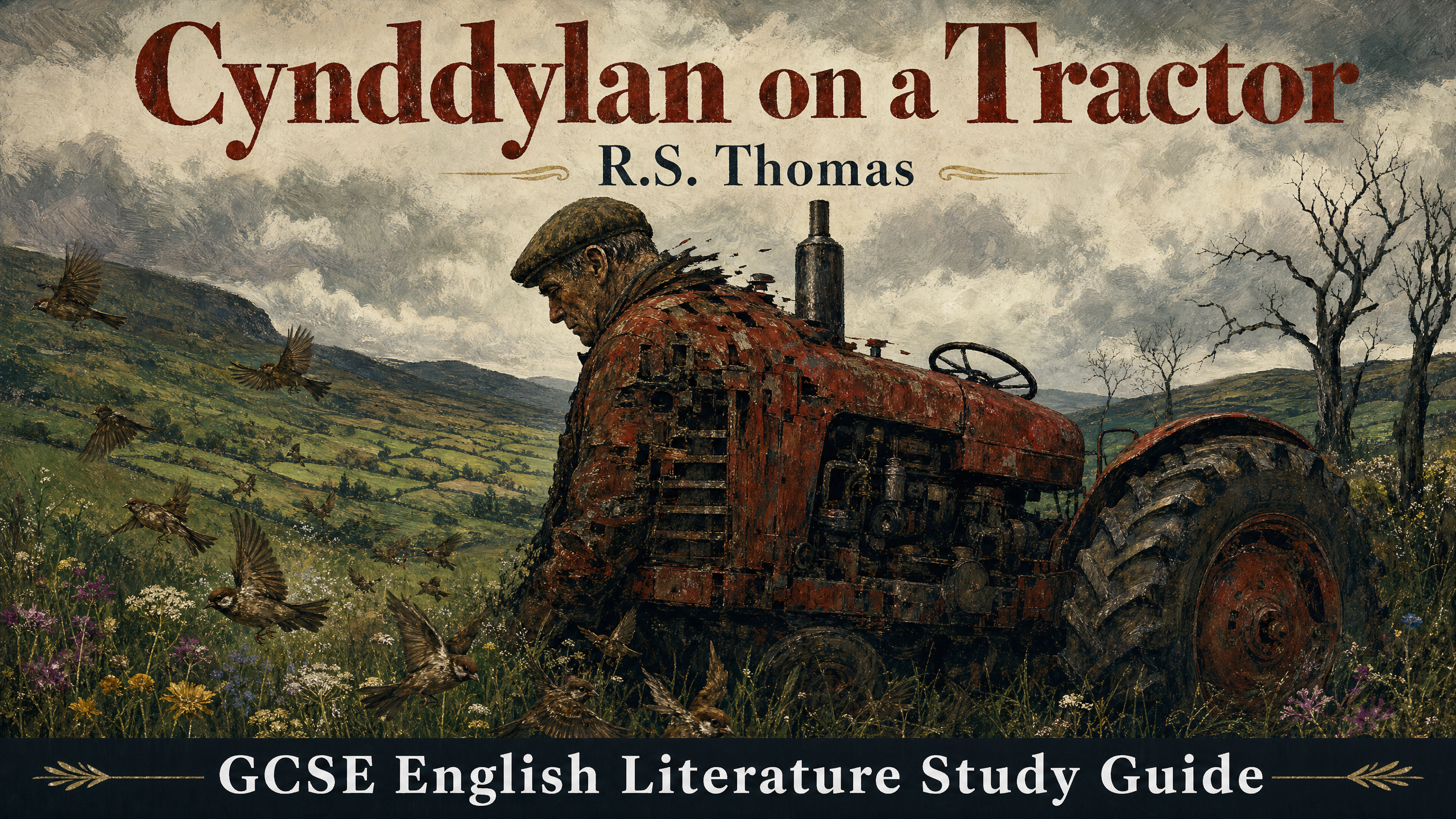
R.S. Thomas's 'Cynddylan on a Tractor' is a powerful critique of post-war agricultural mechanisation in Wales. It offers students rich opportunities to explore themes of identity, the conflict between man and nature, and the loss of traditional culture, making it highly rewarding for AO2 analysis and AO3 contextual links.
Study Notes
Overview
'Cynddylan on a Tractor' by R.S. Thomas is a profound meditation on the impact of modernity on traditional Welsh farming communities. Written in the post-war period when agricultural mechanisation was rapidly transforming the landscape, the poem portrays a farmer who has become entirely subsumed by his machine. Examiners reward candidates who move beyond reading the poem as simply 'anti-technology', instead exploring the nuanced presentation of how mechanisation erodes human identity and severs the ancient connection between man and nature. High-level responses will consistently link Thomas's linguistic choices (AO2) to this broader cultural anxiety (AO3).
Plot/Content Overview
The poem presents a single, striking image: a Welsh farmer, Cynddylan, riding a modern tractor. The speaker observes him with apparent admiration that quickly reveals itself as deep irony. As Cynddylan drives, the natural world—represented by scattering sparrows and an 'empty sky'—retreats from the violent noise and physical intrusion of the machine. The poem concludes with Cynddylan depicted as physically and spiritually broken ('bone-racked'), fused with the very machine he believes he controls.
Themes
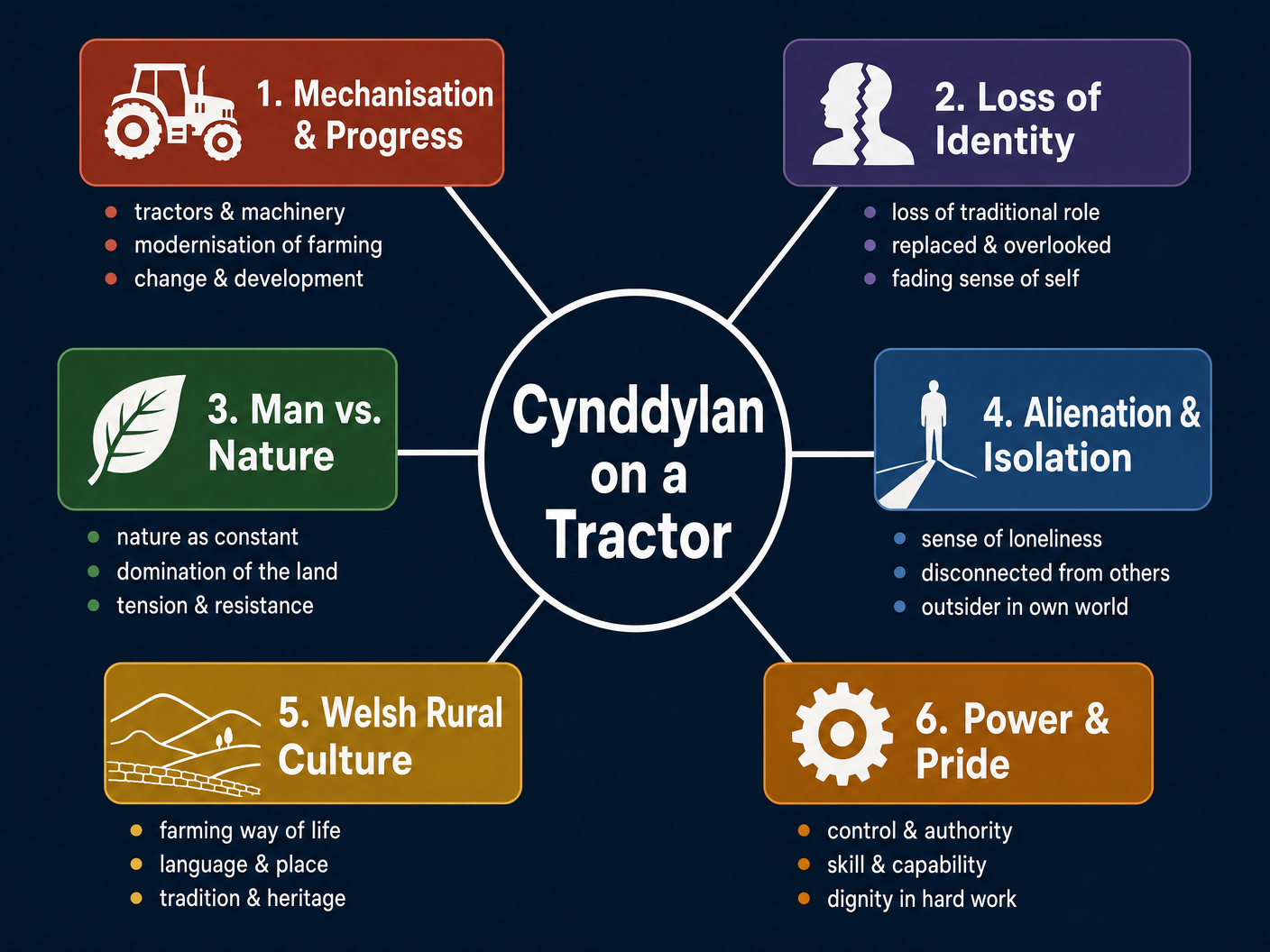
Theme 1: Mechanisation and the Loss of Identity
Thomas explores how the adoption of modern machinery strips away the farmer's traditional identity. Cynddylan is no longer a craftsman of the land; he is merely an extension of the tractor. The boundary between human and machine is deliberately blurred.
Key Quotes:
- "Cynddylan on a tractor" - The juxtaposition of the ancient Welsh name with the modern machine establishes the central conflict immediately.
- "the loud mechanic" - Ambiguous phrasing; it could refer to the tractor or to Cynddylan himself, suggesting they have become indistinguishable.
Theme 2: The Conflict Between Man and Nature
The poem presents mechanisation as a violent assault on the natural order. Where traditional farming worked in harmony with nature, the tractor dominates and disrupts it.
Key Quotes:
- "scattering stark sparrows" - The sibilance and harsh consonants mimic the violent disruption of the natural world.
- "empty sky" - Suggests a landscape drained of life and spiritual presence; nature has fled the machine.
Theme 3: Cultural Erosion in Wales
Beyond the individual farmer, the poem laments the loss of a distinct Welsh rural culture. The tractor represents an Anglicised, industrial modernity erasing traditional ways of life.
Key Quotes:
- "Ah, you should see Cynddylan" - The ironic opening tone mimics the uncritical embrace of progress that Thomas feared was destroying Welsh heritage.
- "bone-racked" - Suggests not just physical vibration, but a deep, structural suffering as the old way of life is shaken apart.
Writer's Methods
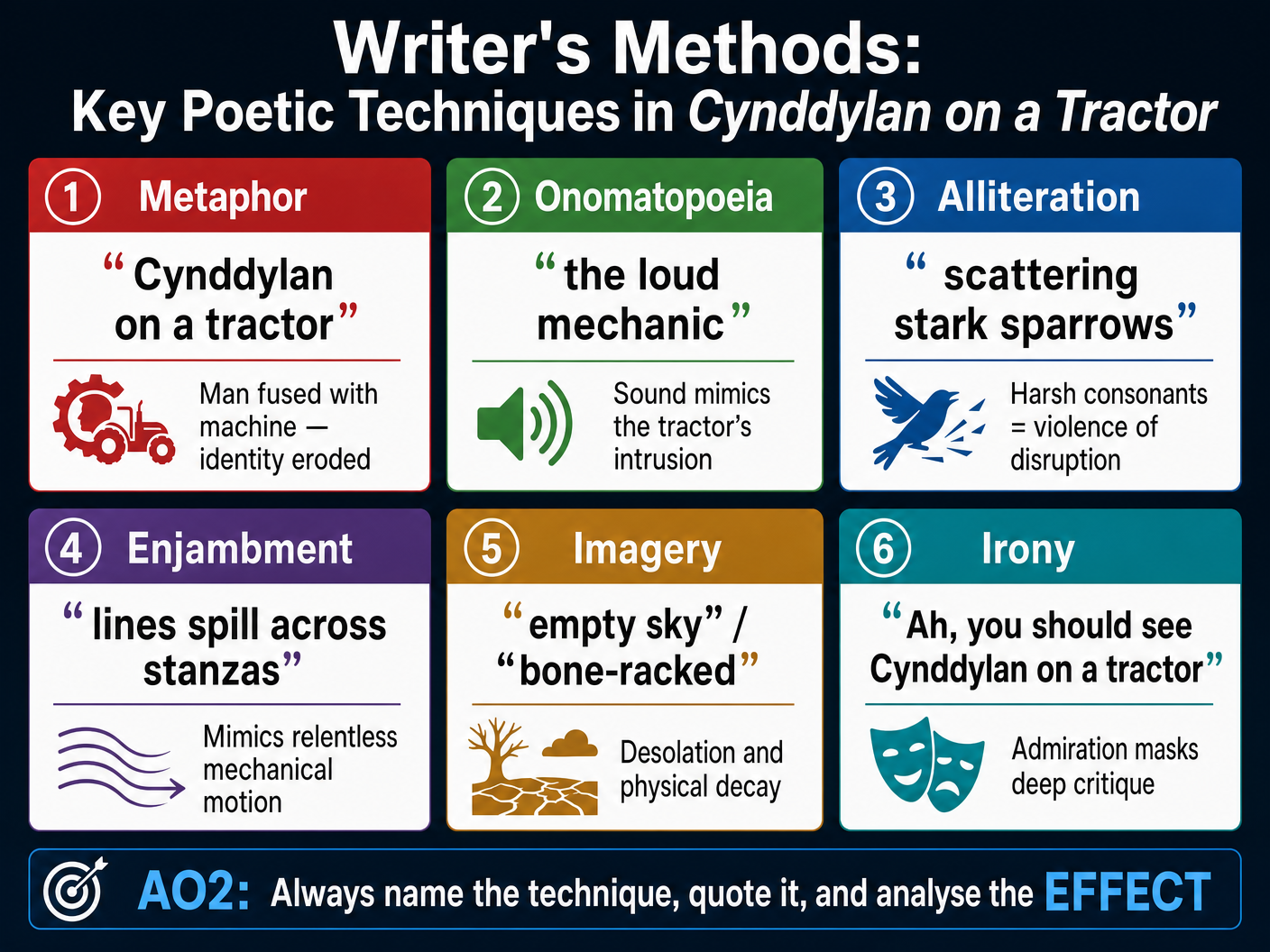
Thomas employs a range of structural and linguistic techniques to convey the violence of mechanisation:
Irony: The poem opens with an exclamation of apparent praise ("Ah!"), establishing a tone of admiration that the rest of the poem systematically dismantles.
Enjambment: Lines spill over without pause, mimicking the relentless, unstoppable forward momentum of the tractor. There is no space for the slow, measured pace of traditional rural life.
Sound Patterning: Thomas uses harsh, percussive sounds (plosives and sibilance) to recreate the mechanical noise of the tractor, such as in "scattering stark sparrows," forcing the reader to experience the auditory assault on the landscape.
Context
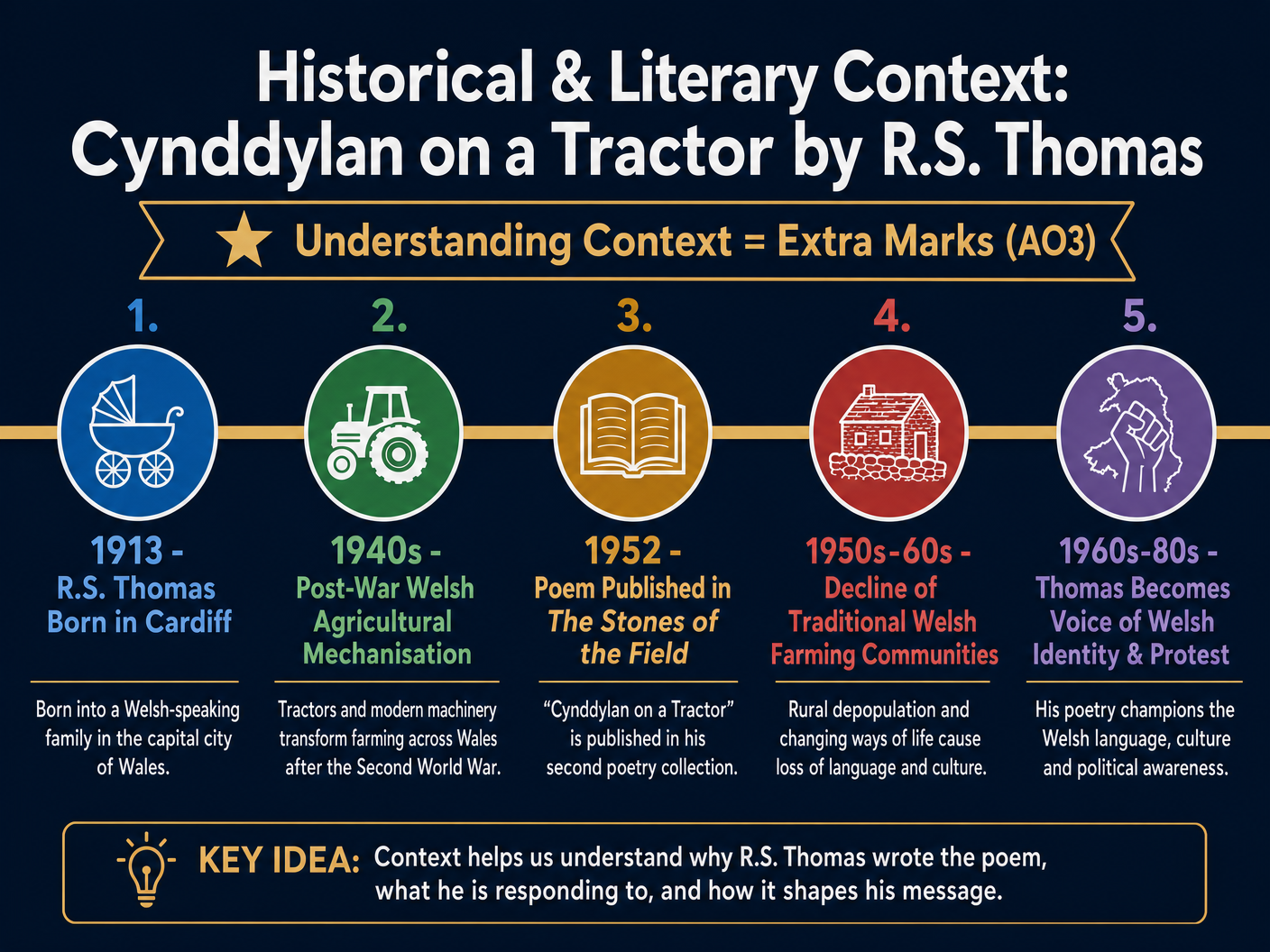
Understanding the context (AO3) is vital for top marks. In the years following the 1947 Agricultural Act, the UK government heavily subsidised the mechanisation of farming. For R.S. Thomas, a priest deeply invested in Welsh language and culture, this was not progress but cultural destruction. The tractor symbolised an imported, industrial mindset that threatened to sever the Welsh people's spiritual and historical connection to their land. Top candidates will use this context to explain why Thomas portrays Cynddylan's transformation so negatively.
Visual Resources
3 diagrams and illustrations
Interactive Diagrams
1 interactive diagram to visualise key concepts
Conceptual Flow Outline
The tragic trajectory of Cynddylan's mechanisation
Worked Examples
2 detailed examples with solutions and examiner commentary
Practice Questions
Test your understanding — click to reveal model answers
Explore how R.S. Thomas presents the loss of traditional identity in 'Cynddylan on a Tractor'.
Hint: Consider how the title contrasts tradition with modernity, and look closely at the phrase 'the loud mechanic'.
How does Thomas use imagery to create a sense of disruption in the poem?
Hint: Focus on the imagery of the birds, the sky, and the physical impact on the farmer.
Compare the presentation of the power of nature in 'Cynddylan on a Tractor' and one other poem you have studied.
Hint: Remember that in this poem, nature is presented as *vulnerable* and *powerless* against the machine, which is a great contrast to poems where nature is a destructive force.
Evaluate the view that 'Cynddylan on a Tractor' is entirely pessimistic about the future.
Hint: To evaluate, you must look at both sides. Is there any genuine admiration for the machine's power, even if the overall message is negative?